These essays are written to encourage reflection, curiosity, and conversation. For many years, this blog served as a forum for discussion among my university students. Today, I hope it continues to inspire thoughtful engagement about the objects, places, people, and ideas that have shaped my life journey.
Thursday, June 29, 2017
Monday, June 12, 2017
Blogging Schedule for SEM1902/COM150, Tri 3, 2016-17
E-portfolio/Blogging Schedule
Please write 350–400 words for each assignment listed below, and then post it on your blog by Sunday evening of the assignment week. By Saturday of the week you posted, you should have made relevant comments in a paragraph or so on the posts of at least three classmates (i.e. two group mates and one other classmate). If you like, you can read and comment on the posts of other classmates as well.
Week 1 / Blog set up
Create your blog (or wordpress.com or blogger.com) and forward your blog address to your tutor’s e-mail (or post it on an instructor-created Google doc). You should also share your address with the members of a blog group that will be assigned during the first lesson. You might also post the links for your classmates’ blog addresses on your own blog. (Email blog address to tutor by 11:30 p.m. on Wednesday May 10.)
Week 2 / Descriptive Reflection: Strengths and Challenges in Communicating (Blogpost #1)
For your first post, describe your strengths in communication and the challenges you have when communicating with others. In view of this, state two objectives you will set for yourself to achieve by the end of this course. (Post draft by 11:30 p.m. on Sunday May 14.)
After you have posted, read at least two of your blogging group members’ posts and at least one post by a member of your class group at large and leave comments. There is no limit, of course, on the number of posts you can read. However, what is most important is the quality of your response. You should reflect on each one of the posts in light of your own understanding of effective communication skills, and you should offer appropriate insights in the comments section of each post that you read.
Week 8 / Interpersonal Conflict Resolution (Blogpost #2)
There are 2 parts to this post.
Part 1: Describe in detail an interpersonal conflict situation, real or hypothetical. Clarity and conciseness are important, as is completeness in your story-telling. Describe the context of the conflict, the people involved, and your perspective of the main problem and possible causes and effects. Try to identify the feelings and/or motivations of the people involved. DO NOT describe how the problem was resolved. Seek from your readers a solution to the interpersonal conflict and reasons for their recommendation. You might ask: What would you do if you were in the conflict situation? (Post draft by 11:30 p.m. on Sunday Jun 25.)
Part 2: Return to your own post for your classmates’ responses. Read their suggested solutions and reasons. Consider the suggestions in light of communication principles and then give your own answer to the problem, including your reasons for your solution. (Post final version by 11:30 p.m. on Thursday Jul 6.)
Week 11 / Project Summary (Blogpost #3)
Post a project summary, which describes each of the following:
· a particular social or workplace context
· your project’s focus (specific communication principles/theories)
· the interpersonal communication problem being explored
· the significance of the topic
· the objective and scope of your study
· proposed data collection/research method
· potential solutions/implementation for problem resolution
· concluding thoughts
Your synopsis should be persuasive. Convince your readers that:
· the interpersonal communication problem you have chosen deserves to be examined;
· your team’s approach to solving the problem, based on specific communication principles/theories, is reasonable and appropriate.
(Post draft by 11:30 p.m. on Sunday Jul 16.)
Week 14 / Critical Reflection on Learning in the Course (Blogpost #4)
For this post, write on two learning experiences.
1. Refer to the two objectives you set yourself at the start of the course (Blogpost 1). Critically reflect on the extent to which you have achieved (or not) the said objectives. You might also reflect on what you have done, as well as what you would do, to further enhance your interpersonal and work communication skills.
2. Choose one focus of the project and critically reflect on your learning in the project. Discuss specific points, such as presentation skills, including verbal and non-verbal skills, teamwork skills, or leadership skills. DO NOT just describe what you did and whether you liked it. Rather, explain what you learned about yourself and others in the process. For instance, how has the experience changed your view of learning and, specifically, of interpersonal communication? What might you take forward from this project experience?
(Post by 11:30 p.m. on Sunday Aug 6.)
After you read your classmates’ posts, give them appropriate feedback on their reflection. Relate what you read of their learning experiences to what you know of interpersonal communication.
Week 15/ Additional posts (with bonus marks)
Additional posts could include the following:
· Mini critical reflections on learning points throughout the course. Write each mini reflection in not more than 150 words.
· Documentation from the Project, the Presentation Pitch (PP) and the Project Oral Presentation (POP) (i.e. meeting minutes, notes from your storyboard of the project video, outline for the PP, and notes or a script for the POP, and the video itself).
Although no student feedback is required for these posts, comments are welcomed.
Monday, April 24, 2017
Tuesday, March 14, 2017
Monday, March 13, 2017
Monday, February 06, 2017
BHB2802 Initial Project Meeting Discussion
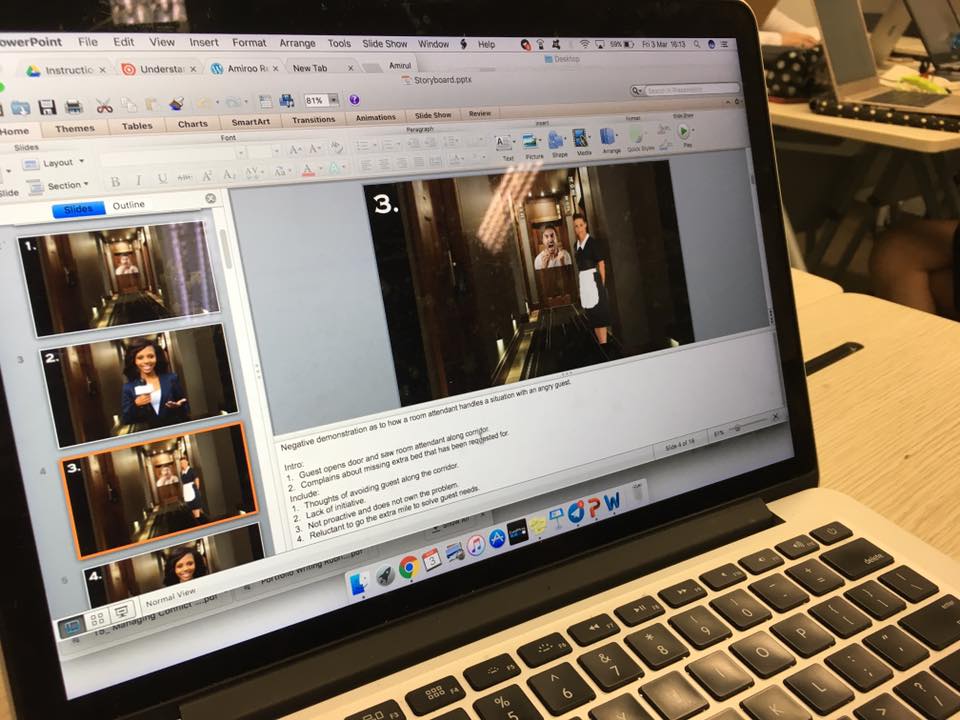
These photos are from BHB2802 Group 5. They show various project teams as they are discussing their research project's prospective topic focus.
Tuesday, January 03, 2017
BHB2802 Interpersonal Communication _ The Learning Portfolio
The Written Assignments
There are four mandatory writing assignments for the
learning portfolio. Each of the portfolio assignments is explained as a
submission below and should be completed as explained.
The Written Responses
For effective communication, it is essential that you learn to respond
appropriately to what you hear, watch and read. For your learning portfolio in
BHB2802, an essential component is the comments you make responding to your
classmates’ posts. Comments on at least
three classmates’ posts should be made within the tutorial week following the
one when you first uploaded your own post to the portfolio. (See in red below.)
Submission 1: Formal Email: Self Introduction
Due by the start of the tutorial, Week 2
Post a formal email, addressed to me, in which you describe your educational and/or
professional experience and what you would consider your strengths and
weaknesses when it comes to communication. Try to be clear and concise and yet
comprehensive in your description. The audience should be viewed as me as well as a group of
professional peers.
This
should be 250 to 300 words.
As
you respond to your peers’ self-descriptions, try to give feedback that
establishes a connection between their experiences and your own.
Submission 2: Reflection
Due by the end of Week 6
Post a reflection on an interpersonal communication problem you have
recently experienced. Use as a framework for this reflection Gibb’s Model of Reflection
(1988). You should describe the workplace (or other social) context, the
problem scenario and possible root causes, and the persons involved. Also, be
careful to explain how you felt about the situation, how you evaluated it, and
what conclusions you could draw about the root causes and effects. DO NOT describe how the problem
was resolved.
The purpose of this assignment is for you to get feedback from your classmates on how they think your problem can be resolved. In fact, I think I had mentioned in class how you should frame the ending of the scenario described with a question.
Let me give you an example.
Let's say I recently ordered pizza online. When the pizza arrived, I found that it was not my order. So instead of keeping my cool, I acted angry with the delivery guy and refused to pay. At that point the delivery guy called his store and connected me with the person who had taken my order. At that moment I realized that the person to whom I had given the order had a strong English accent and was definitely not a native speaker. He might not have comprehended correctly the first time I called as I placed the order. This time I am assured though that a new order would be prepared, for no charge, and so I have calmed down. At this point I feel some guilt for frying the delivery man. How might I then make amends with the delivery fellow?
The purpose of this assignment is for you to get feedback from your classmates on how they think your problem can be resolved. In fact, I think I had mentioned in class how you should frame the ending of the scenario described with a question.
Let me give you an example.
Let's say I recently ordered pizza online. When the pizza arrived, I found that it was not my order. So instead of keeping my cool, I acted angry with the delivery guy and refused to pay. At that point the delivery guy called his store and connected me with the person who had taken my order. At that moment I realized that the person to whom I had given the order had a strong English accent and was definitely not a native speaker. He might not have comprehended correctly the first time I called as I placed the order. This time I am assured though that a new order would be prepared, for no charge, and so I have calmed down. At this point I feel some guilt for frying the delivery man. How might I then make amends with the delivery fellow?
This
should be 250 to 300 words.
As
you respond to your peers’ reflections, try to offer suggestions for how they
might solve the problem based on what you know and have learned about
interpersonal communication so far.
Submission 3: Project Synopsis
Due (first draft) by Week 8
Post a Project Synopsis,
which describes each of the following:
·
a specific workplace context
·
your project’s thematic focus
·
the interpersonal communication problem being explored
·
the nature of your project’s
professional importance
·
the objective and scope of your
study
·
proposed data
collection/research method
·
potential
solutions/implementation for problem resolution
·
benefits to the workplace
·
concluding thoughts
Your synopsis should be persuasive: In it you must convince an audience
of peers that the interpersonal communication problem you have chosen merits
study and that your team has developed an approach to solving such a problem.
This
should be 1000 to 1200 words.
Formative
feedback, based on criteria provided by the instructor, will be provided first
by a peer team during a peer review session and then by your instructor during
a consultation. The final draft will be evaluated. All drafts should be
included in the portfolio.
Submission 4: Critical
Reflection
Due by the start of the tutorial, Week 13
Post a critical reflection on your learning experience from the project
in this module. In the reflection, you should explain in detail what you
studied and what you learned, why you did it, how the process made you feel,
and how the experience might have changed your views and/or any future behavior.
You should conclude by discussing how you might be changed by what you have learned
and how this might impact you in the future.
This should be 250-300 words.
As
you respond to your peers’ reflections, pay particular attention to how they
state they have been changed by the experience. Try to connect what you have
learned about interpersonal communication with what your peer describes,
explaining common points and differences.
Thursday, December 01, 2016
Subscribe to:
Posts (Atom)